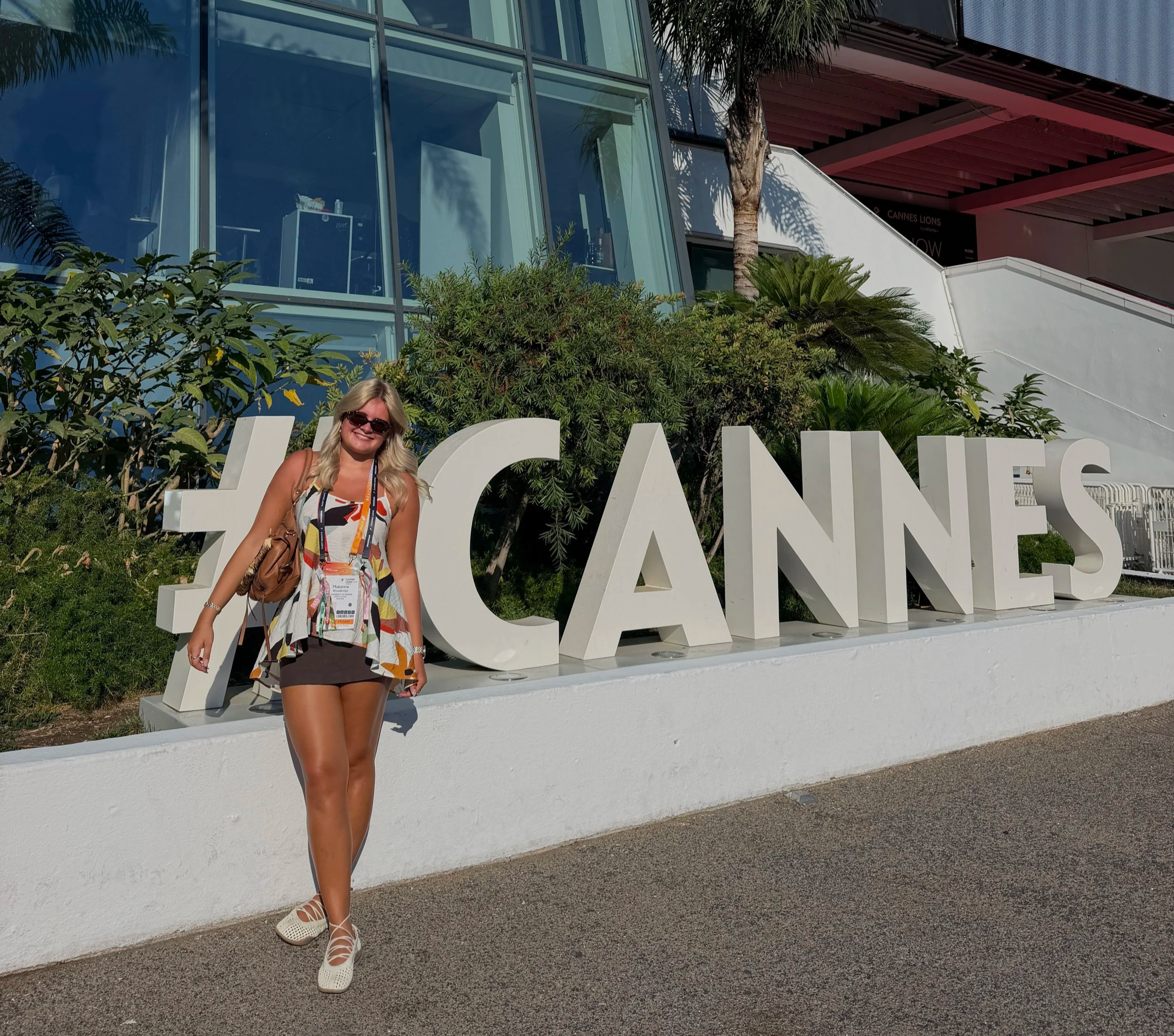
Monday, June 22nd.
Monday, June 22nd.
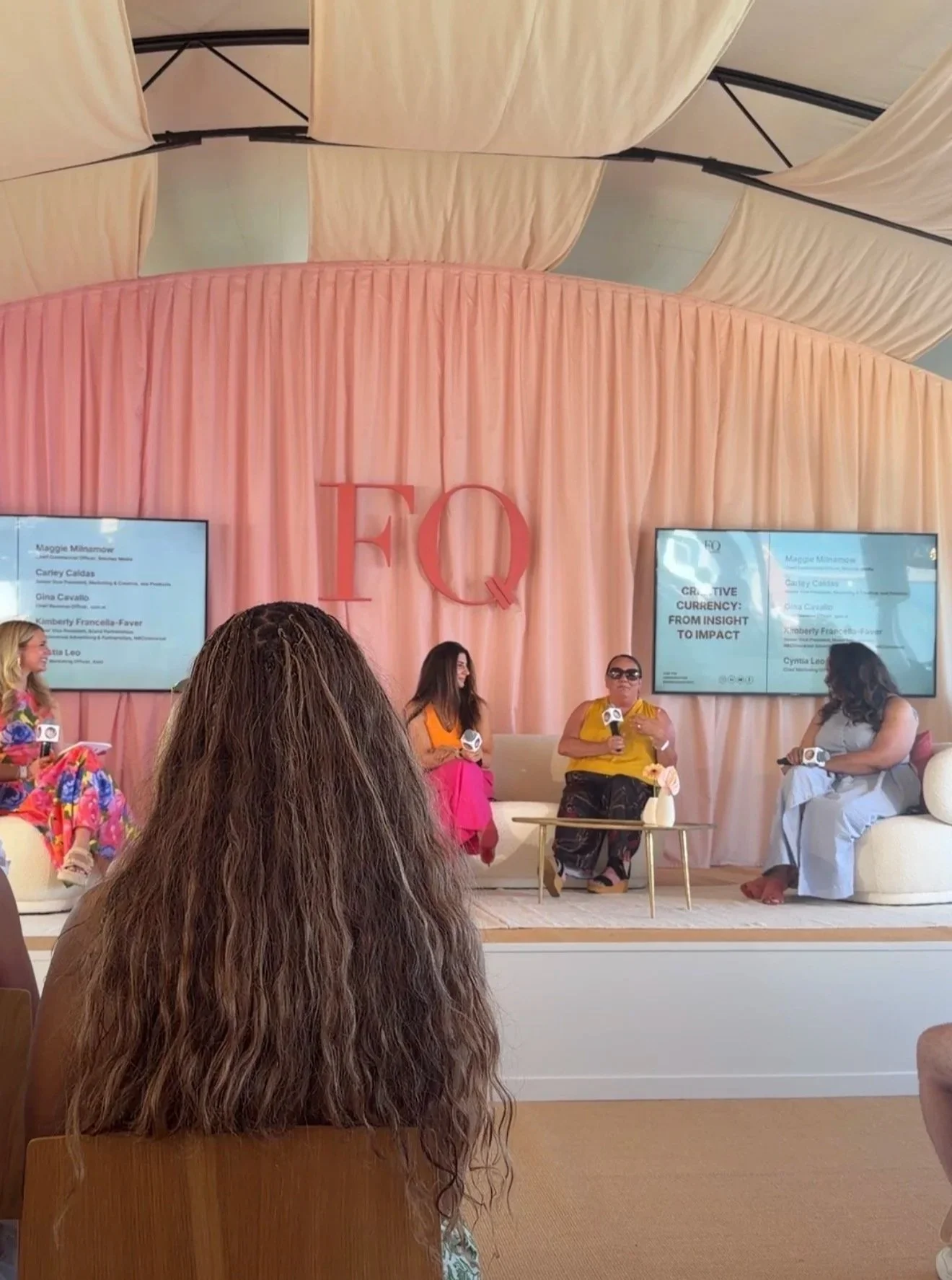
1. FQ: Creative Currency, From Insight to Impact
Walking into my first day at Cannes Lions, I had no idea what to expect. I was excited, a little overwhelmed, but completely ready to dive in. My first stop was Female Quotient, where I grabbed an iced coffee from their FQ Changemaker Café and waited for my first session of the week to start.
The panel, featuring Maggie Milnamow (Betches Media), Carley Caldas (eos Products), Gina Cavallo (xpln.ai), Kimberly Francella-Fave (NBCUniversal), and Cyntia Leo (Knix), focused on how brands turn insights into impact, and one idea stuck with me immediately: people trust people, not products. Instead of relying only on research reports or data, the speakers talked about looking at real conversations. Comments, reviews, and honest opinions are where some of the best consumer insights come from because that's where people are the most authentic. It seems so obvious, but it completely changed the way I think about research in marketing. I couldn't have asked for a better first session because it set the tone for the rest of the day.
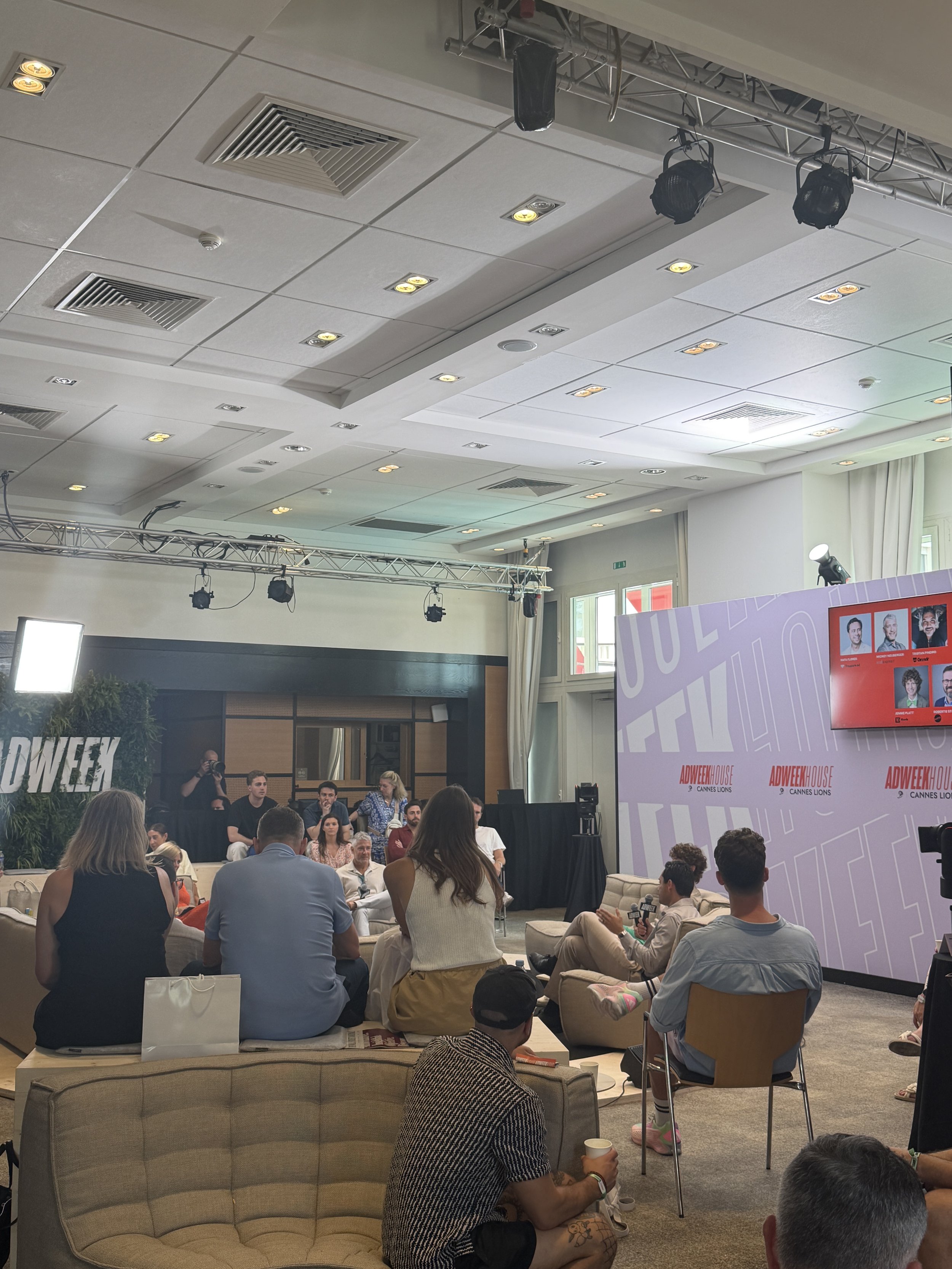
2. ADWEEK: The Human Edge of Marketing
After my first talk, I realized just how hot Cannes actually was, so I went searching for some air conditioning and ended up at the Adweek House. Honestly, it became my favorite venue of the entire week. Unlike some of the larger stages, the setup was much smaller and more intimate. Everyone was seated in a circle, so it felt less like a presentation and more like you were part of the conversation.
This panel, featuring Rafa Flores (Treasure AI), Tristan Pineiro (Grindr), Mickey Neuberger (Realtor.com), Jennie Platt (TD Bank), and Roberto Stanichi (Mattel), centered around AI, but instead of focusing on all the negatives that usually come with the conversation, the speakers challenged everyone to look at AI as an opportunity. One quote that I immediately wrote down was, "Speed will determine the winners from the losers when it comes to AI," from Mickey Neuberger. While AI can make us faster and more efficient, the speakers also emphasized that none of it matters if a brand loses what makes it authentic. Consumers still connect with brands that feel genuine, and AI should enhance that, not replace it.
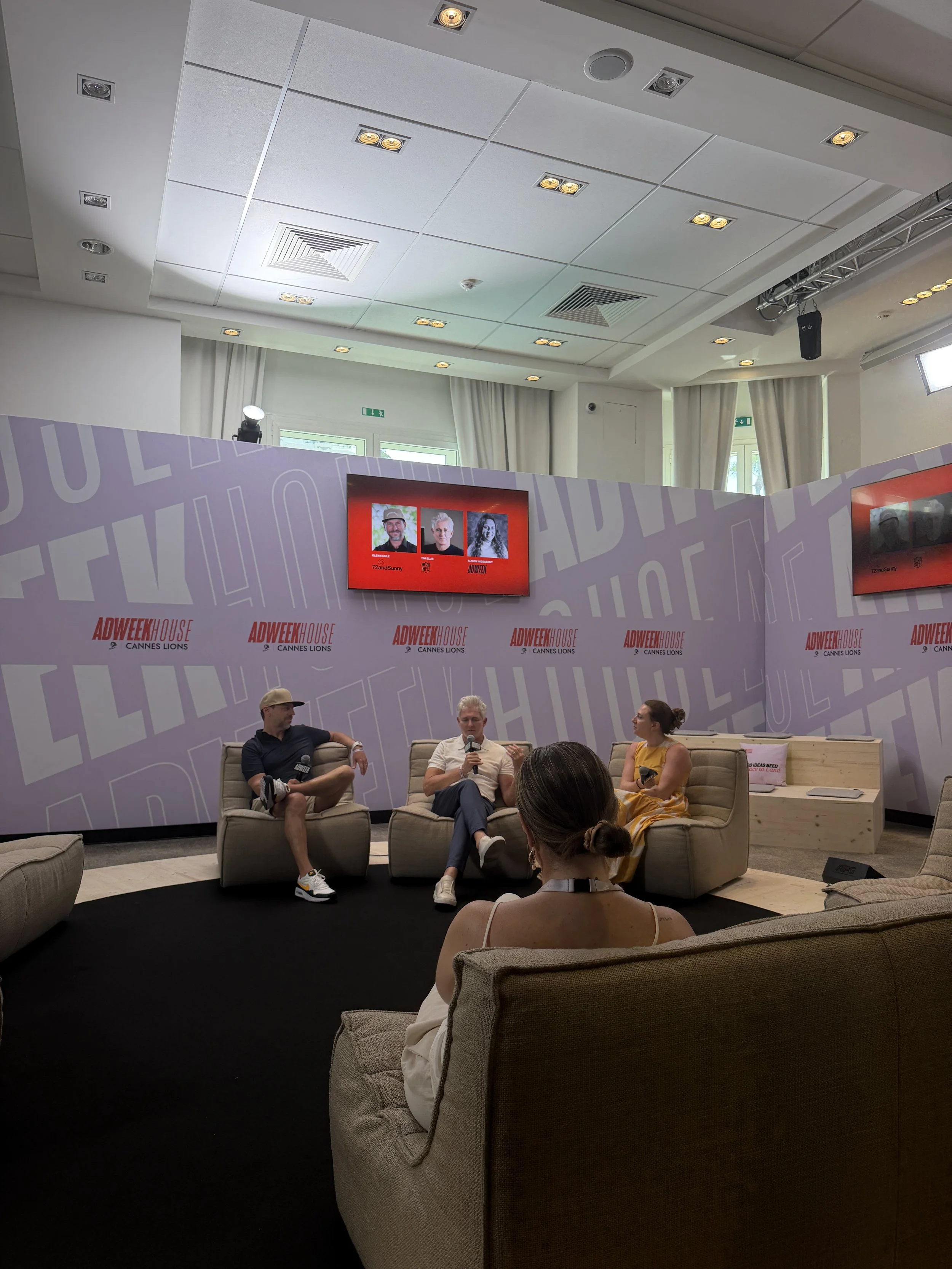
3. ADWEEK: The End Zone Is Everywhere: Building Fandom Beyond the Field with the NFL and 72andSunny
This was, without a doubt, my favorite talk of the day, and it wasn't even on my original schedule. Looking back, I'm so glad I decided to stay in the AC because Tim Ellis, CMO of the NFL, and Glenn Cole, Co-Founder of 72andSunny, shared some of my favorite insights from the day.
One thing that really stood out to me was the NFL's "helmets off" approach. Instead of only marketing the game itself, they're focused on showing the personalities behind the players and creating emotional connections with fans. It was a great reminder that people connect with people long before they connect with a brand, similarly connecting to what was first said in my first talk at FQ.
The quote I immediately wrote down was, "In order to grow, you have to be willing to make people uncomfortable." Tim Ellis explained that the brands willing to take risks are the ones that continue to grow. He used the example of choosing Bad Bunny for the Super Bowl Halftime Show. Not everyone understood the decision at first, but it connected with an audience and culture that the NFL wanted to continue investing in. If brands stop evolving with their audience, they eventually become irrelevant.
I also loved hearing Tim talk about the importance of mentorship. As someone who's about to enter the advertising industry, it was reassuring to hear how much he values learning from others while also being willing to challenge the status quo. This talk reminded me that some of the best marketing isn't about playing it safe—it's about having the confidence to try something different.
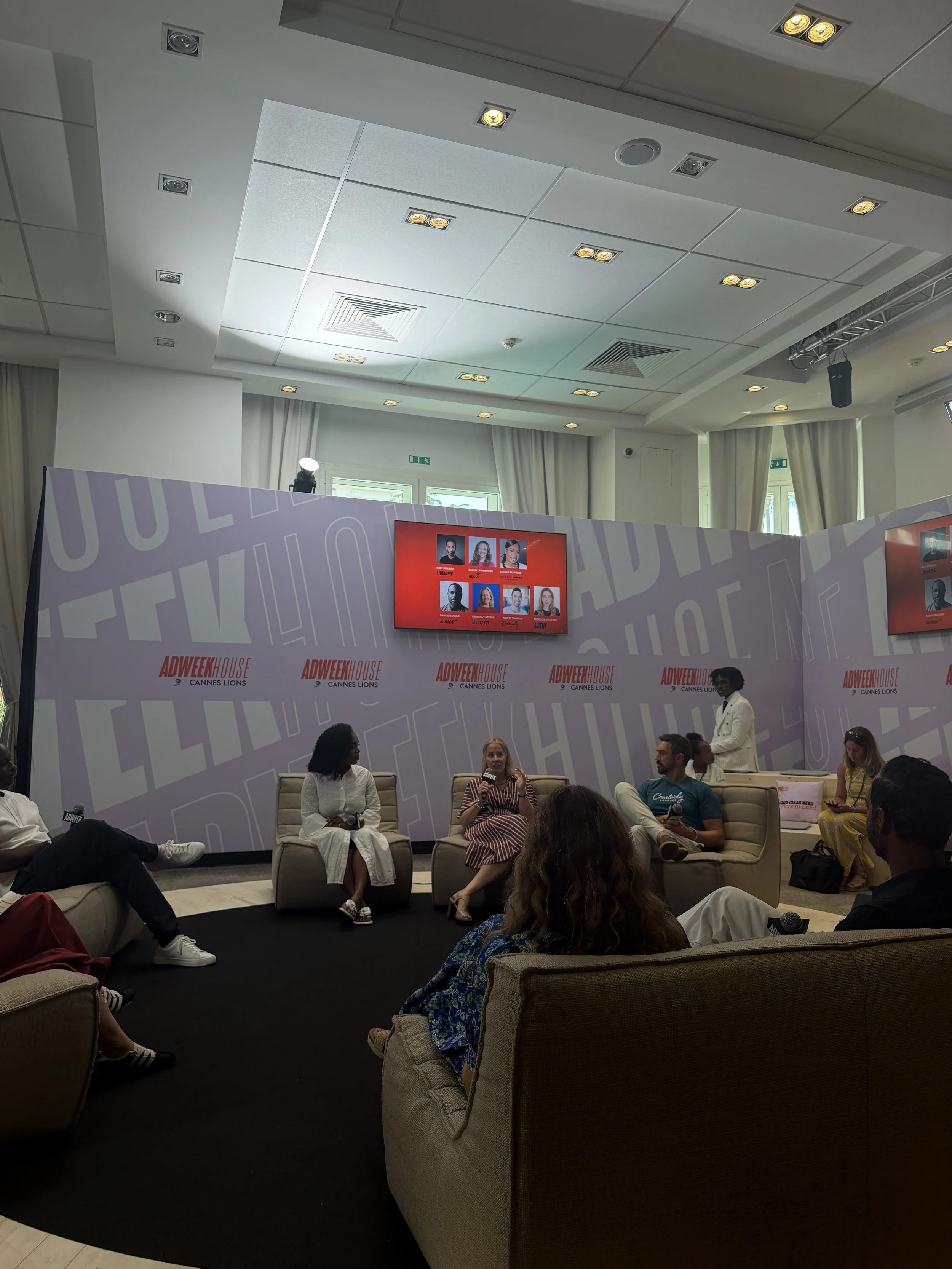
4. ADWEEK: Social Isn't Failing Brand Building. The Creative Approach Is.
This panel, featuring Indy Khabra (Livewire), Sarah Leinberger (Yoobi), Shaina Rainford (Bask & Lather), Rance Randle (Audible), Kimberly Storin (Zoom), and Scott Thomas (Creativity Squared), ended up being one of the most interesting conversations of the day because not everyone agreed—and I think that's what made it so engaging. One of the biggest debates was whether TikTok is actually a place where brands can be built. Hearing different perspectives instead of everyone agreeing made the discussion feel much more real.
One idea that really stuck with me was the difference between brand consistency and creative consistency. Brands are so focused on posting constantly that they sometimes forget to create content people actually want to watch. Rance Randle said, "People don't have short attention spans—they have low tolerance for bad work," and I honestly think that was one of the best quotes of the session. Maybe people aren't scrolling because they have short attention spans; they're scrolling because brands haven't given them a reason to stop.
Another point I loved was that social content shouldn't just be TV commercials reformatted for TikTok. Every platform has its own style, audience, and language, so creatives should be built specifically for where it's going to live. It seems obvious, but it's something many brands still don't do.
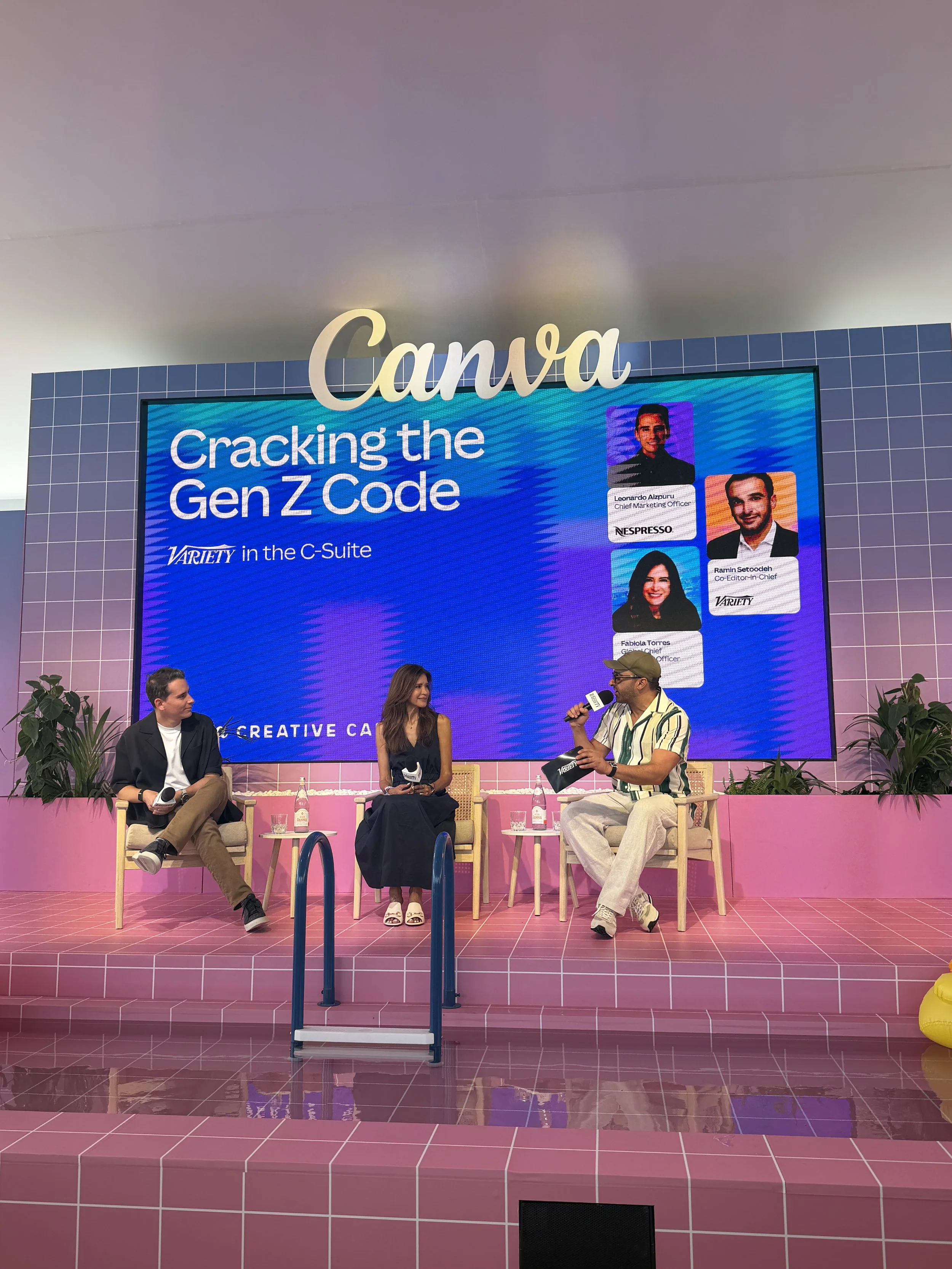
5. CANVA: Cracking the Gen Z Code
Before this talk even started, Kena and I ended up meeting Marta Pichlak-Miarka from Omnicom while we were waiting for the session to begin. We started chatting, and she shared that she was there because Fabiola Torres from Gap is one of her clients. She was so sweet, and we had such a great conversation about how she got started in her career, her journey to where she is today, and the advice she had for us. It was such a cool reminder that one of the best parts of Cannes isn't just the sessions—it's the people you meet in between them.
The panel, featuring Leonardo Aizpuru (Nespresso), Fabiola Torres (Gap), and Ramin Setoodeh (Variety), focused on what brands often get wrong when trying to reach Gen Z. Instead of chasing creators with the biggest followings, the speakers emphasized finding creators who are genuinely authentic and naturally align with the brand. One comment that made everyone laugh was, "I want to be in their closet," which perfectly summed up how Gen Z follows creators because they genuinely admire their style and lifestyle—not just because they're famous. They also talked about how Gen Alpha is already looking to Gen Z for inspiration, making authenticity even more important as brands think about the future.
As a Gen Z, it was interesting hearing marketers talk about my generation while also realizing how quickly the next generation is already influencing marketing decisions. It made me think less about chasing trends and more about building genuine connections with consumers.
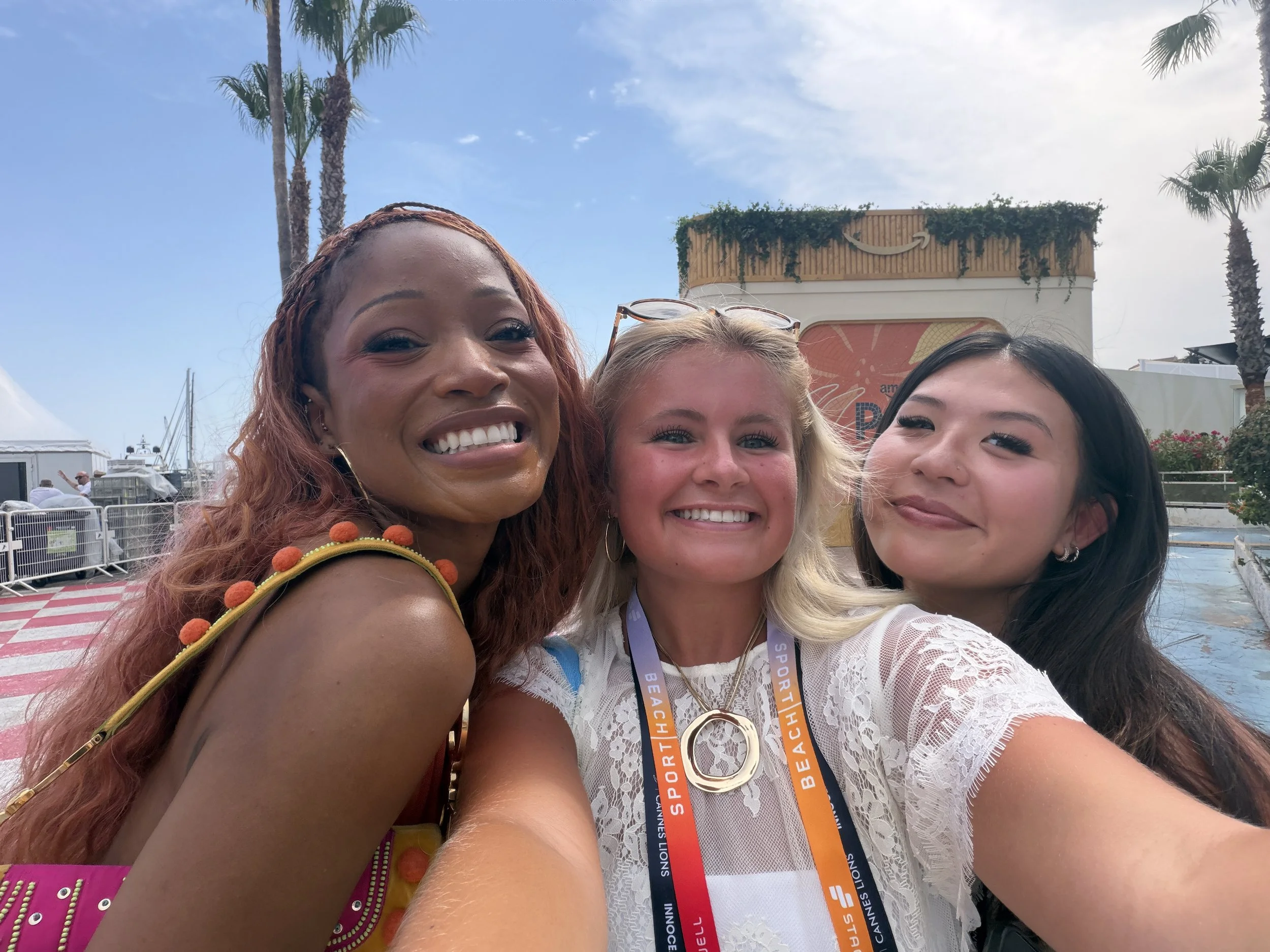
Side note: On the way to our next session, we randomly ran into Keke Palmer—definitely not something I expected to happen on day one! I was too stunned to speak, so I literally froze at first.
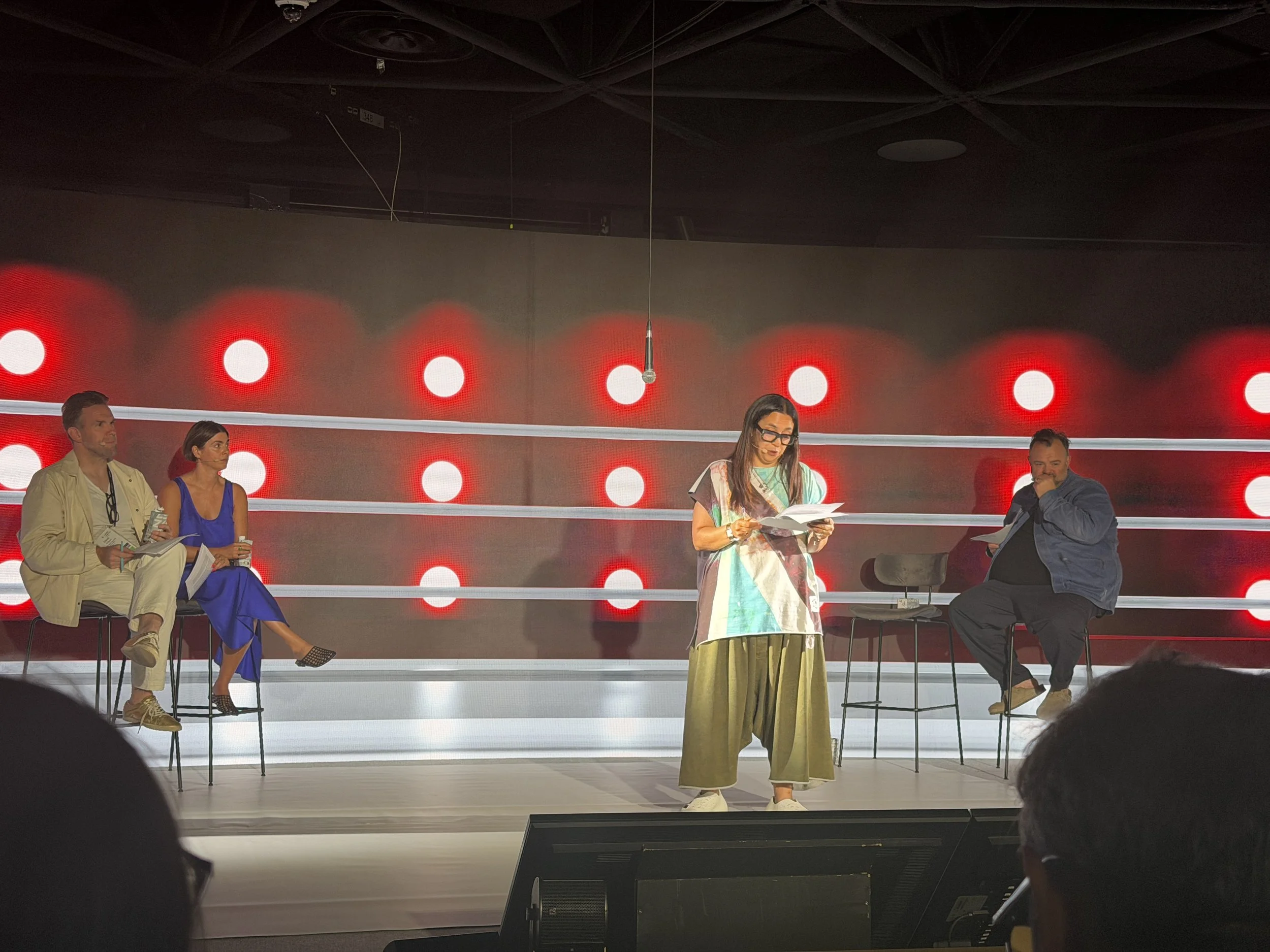
6. DEBATE: Creative Taste Is Not Opinion, but an Objective Truth
I wanted to end my first day with something a little different, and this debate definitely delivered. David Kolbusz (Orchard Creative), Lynsey Atkin (Baby Teeth), Richard Brim (Ace of Hearts), and Chaka Sobhani (TBWA\Worldwide) each argued a side of the debate—even if it wasn't what they personally believed. I thought that made the conversation so much more interesting because it forced everyone to think outside of their own opinions.
The debate centered around whether great creative work can actually be judged objectively or if it's all based on personal taste. One point that really stuck with me was the idea that one of the biggest threats to creativity is believing there's only one standard for what's considered "good." If everyone judged creativity the exact same way, advertising would become predictable, and the industry would stop pushing boundaries.
I don't know if I walked away with a definitive answer, but I don't think that was the point. The session challenged me to think differently about creative work and reminded me that some of the best ideas are often the most polarizing at first.